Hyderabad Air Quality Index (AQI) Monthly Analysis: Winter Pollution Spike Followed by Gradual Improvement
Table of contents
Introduction
Hyderabad: The Air Quality Index (AQI) in Hyderabad recorded noticeable fluctuations during the past month, with pollution levels rising during the early weeks before gradually improving toward the end of the period. Data from official monitoring stations indicates that seasonal weather conditions and local emission sources played a significant role in these variations.
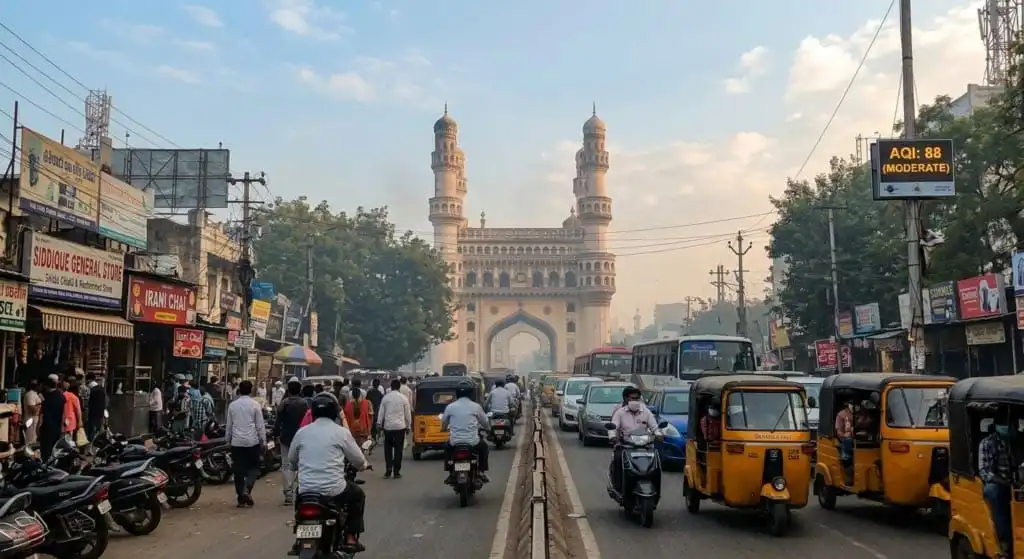
According to monitoring records from the Telangana State Pollution Control Board and the Central Pollution Control Board, the city’s AQI ranged between the “Moderate” and “Poor” categories on several days during the month.
Monthly AQI Trend in Hyderabad
During the first week of the month, Hyderabad recorded AQI values mostly within the Moderate category. However, mid-month readings showed a noticeable increase in pollution levels, pushing AQI into the Poor category in certain locations.
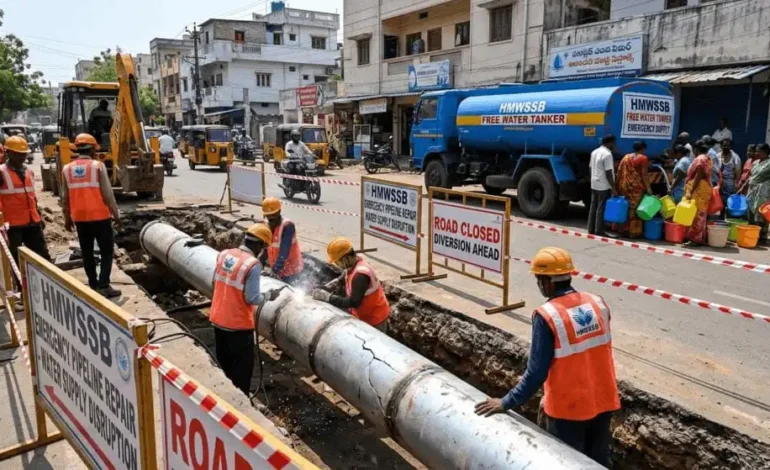
Higher pollution levels were particularly observed in areas experiencing heavy traffic movement and ongoing construction activities.
By the final week of the month, air quality began to improve. AQI values gradually returned to the Moderate range as wind circulation improved and atmospheric conditions became more favourable for pollutant dispersion.
Major Pollutants Contributing to AQI
PM2.5 and PM10 Levels
Monitoring stations reported that PM2.5 and PM10 particulate matter were the primary pollutants responsible for AQI fluctuations during the month.
Key Pollution Sources
Environmental experts identify several common sources contributing to these particulate emissions:
- Vehicle emissions
- Road dust
- Construction activities
- Industrial operations
On days when the AQI reached the Poor category, PM2.5 levels exceeded recommended safety standards.
Health experts note that fine particulate pollution may affect respiratory health, particularly among children, elderly individuals, and those with pre-existing lung conditions.
Official Response and Pollution Control Measures
Officials from the Telangana State Pollution Control Board stated that inspections and monitoring activities are being conducted regularly across major pollution-sensitive locations.
Authorities have instructed construction sites to follow dust-control measures, including:
- Water sprinkling at project sites
- Covering raw construction materials
- Managing transportation of construction debris
Civic authorities are also promoting the use of public transport systems to reduce vehicle emissions within the city.
Impact on Public Health and Daily Activities
Fluctuating AQI levels have raised health concerns for residents, particularly during days classified under the Poor air quality category.
Doctors advise citizens to limit prolonged outdoor activities when pollution levels are high. Vulnerable groups are encouraged to use protective masks and maintain indoor air quality through proper ventilation or filtration.
Schools and outdoor activity organisers have also been advised to monitor AQI updates before scheduling extended outdoor programmes.
Environmental Factors Behind AQI Changes
Weather Conditions
Environmental experts attribute the mid-month pollution spike to several factors:
- Reduced wind speed
- Temperature inversion conditions
- Seasonal winter weather patterns
Urban Activity
Additional contributing factors include:
- Increased vehicular movement
- Localised construction activities
- Industrial emissions
During winter months, cooler atmospheric conditions can slow the dispersion of pollutants, leading to temporary increases in urban air pollution.
Comparative Observation with Previous Months
Officials noted that while pollution levels increased slightly compared to previous months, they remain lower than certain winter pollution peaks recorded in earlier years.
Environmental monitoring and stricter pollution control measures are expected to help maintain stable air quality levels across the city.
Future Monitoring and Preventive Measures
Authorities confirmed that continuous air quality monitoring will remain in place across identified stations in Hyderabad.
If AQI levels rise again, additional measures may be implemented, including:
- Intensified dust-control drives
- Vehicle emission checks
- Public awareness campaigns
Residents are also encouraged to reduce private vehicle use, avoid waste burning, and follow environmental guidelines to support cleaner air.
Conclusion
The monthly AQI analysis for Hyderabad indicates a temporary mid-month rise in pollution levels followed by gradual improvement in air quality toward the end of the period.
While most readings remained within the Moderate to Poor range, authorities continue to emphasise the importance of pollution control measures and public cooperation to maintain healthier air standards in the city.
Residents are advised to stay updated through official AQI monitoring platforms and follow recommended health precautions during periods of elevated pollution.