

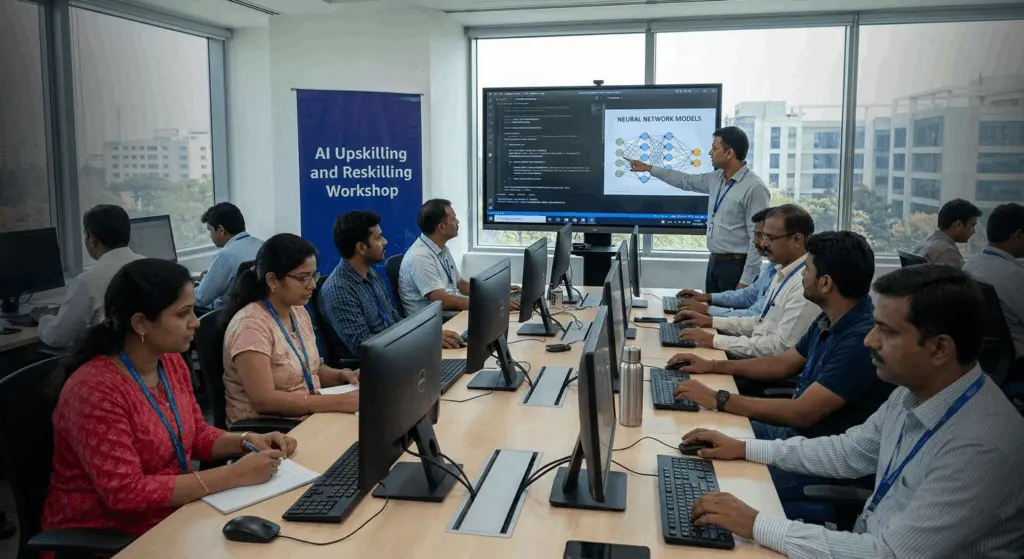
Artificial Intelligence (AI) is no longer an emerging technology in India—it is becoming a core part of business operations, public services, and everyday life. From automating customer support to improving medical diagnostics and financial security, AI adoption is accelerating across multiple industries.
As businesses compete to improve productivity and reduce operational costs, AI-powered tools are helping organisations make faster decisions and deliver better services. At the same time, the rapid growth of AI has sparked discussions about employment, workforce transformation, and the need for new skills.
Industry experts believe that 2026 could become a defining year for India’s AI ecosystem as government initiatives, startup innovation, and digital infrastructure continue to expand.
Why AI Adoption Is Rising in India
Several factors are driving India’s growing interest in artificial intelligence.
Digital Transformation
Businesses are generating enormous amounts of data every day. AI helps analyse this information quickly, allowing companies to improve operations and customer experiences.
Government Support
Government-backed digital initiatives and investments in technology have encouraged organisations to adopt AI solutions across various sectors.
Affordable Cloud Computing
Cloud platforms have made AI technologies more accessible for startups and small businesses that previously could not afford advanced computing systems.
Startup Ecosystem
India’s growing startup ecosystem is developing innovative AI products for healthcare, agriculture, finance, education, and logistics.
Related Posts
- Hyderabad IT Hiring Boom 2026: Top Skills Driving High Salaries
- Best Areas in Hyderabad for IT Professionals 2026 | Rent, Connectivity Guide
Industries Leading India’s AI Revolution
AI adoption is expanding rapidly across several sectors.
Information Technology
Software companies use AI for:
- Code generation
- Software testing
- Cybersecurity
- Customer support automation
- Predictive maintenance
AI-powered development tools are helping developers complete projects more efficiently.
Healthcare
Hospitals and healthcare providers are using AI for:
- Medical imaging analysis
- Disease prediction
- Patient management
- Drug research
- Remote healthcare services
AI assists doctors by providing data-driven insights, although final medical decisions remain with healthcare professionals.
Banking and Finance
Banks and financial institutions use AI for:
- Fraud detection
- Credit assessment
- Customer service chatbots
- Investment analysis
- Risk management
AI helps identify unusual transaction patterns that could indicate fraud.
Retail and E-commerce
Retail companies use AI for:
- Product recommendations
- Inventory management
- Customer behaviour analysis
- Supply chain optimisation
- Personalised marketing
These systems improve customer experiences while reducing business costs.
Manufacturing
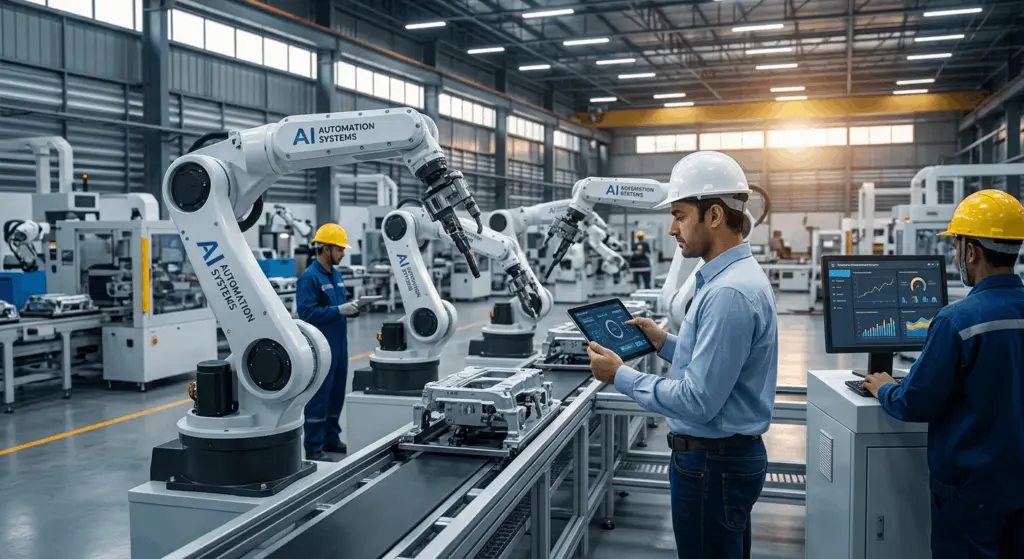
Factories are increasingly adopting AI for:
- Quality control
- Equipment monitoring
- Predictive maintenance
- Production planning
- Automation
This reduces downtime and increases productivity.
How AI Is Affecting Jobs in India
The impact of AI on employment remains one of the most debated topics.
Jobs at Risk
Routine and repetitive tasks are increasingly being automated.
Examples include:
- Data entry
- Basic customer support
- Administrative processing
- Document verification
- Simple accounting functions
New Career Opportunities
AI is also creating entirely new professions.
Growing roles include:
- AI Engineers
- Machine Learning Specialists
- Data Scientists
- Prompt Engineers
- AI Product Managers
- Cybersecurity Analysts
- AI Ethics Consultants
Industry observers suggest that AI is more likely to transform jobs rather than eliminate entire professions.
Why Upskilling Is Becoming Essential
Experts believe that continuous learning will become increasingly important.
Professionals are upgrading their skills in:
Technical Skills
- Python programming
- Data analytics
- Machine learning
- Cloud computing
Business Skills
- AI strategy
- Digital transformation
- Project management
Human Skills
- Creativity
- Leadership
- Communication
- Critical thinking
Educational institutions and online learning platforms are expanding AI-focused programmes to meet industry demand.
How Businesses Are Benefiting from AI
Companies adopting AI report several advantages.
Improved Productivity
Automation reduces repetitive work and allows employees to focus on strategic tasks.
Better Decision Making
AI processes vast amounts of information to identify trends and patterns.
Cost Reduction
Businesses can reduce operational expenses through automation and predictive maintenance.
Enhanced Customer Experience
AI-powered chatbots and recommendation systems provide personalised services.
Small and medium enterprises are also increasingly adopting affordable AI tools.
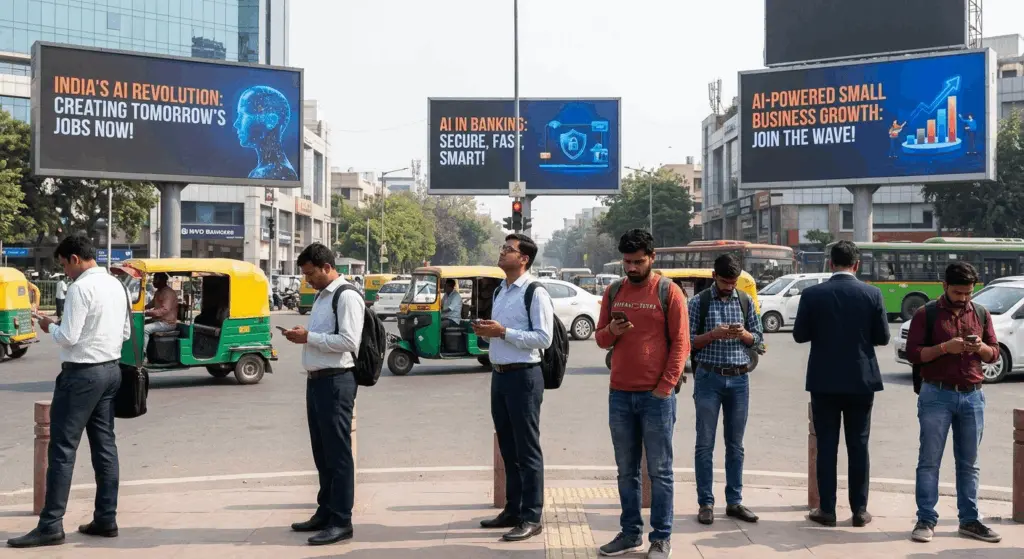
Government Initiatives Supporting AI Growth
India is investing in AI through various digital and innovation programmes.
Government efforts focus on:
- Research and development
- Startup support
- Skill development
- Digital infrastructure
- Public-private partnerships
These initiatives aim to strengthen India’s position in the global AI ecosystem.
Challenges Facing AI Adoption
Despite rapid growth, several obstacles remain.
Skill Gap
Demand for AI professionals exceeds supply.
Data Privacy
Businesses must protect sensitive customer information.
High Initial Costs
Advanced AI implementation can require significant investment.
Ethical Concerns
Questions around transparency, bias, and accountability continue to evolve.
Experts believe clear regulations and responsible AI practices will play a crucial role in long-term growth.
What AI Means for Ordinary Citizens
AI is already influencing daily life.
Consumers encounter AI through:
- Online shopping recommendations
- Banking applications
- Navigation systems
- Voice assistants
- Healthcare services
- Educational platforms
While automation offers convenience, adapting to technological change will remain important.
What Could Happen Next?
Industry analysts expect AI adoption in India to continue expanding over the coming years.
Potential developments include:
Smarter Cities
AI-powered traffic and public service management.
Better Healthcare
Improved diagnostics and patient care.
Agriculture Innovation
Precision farming and crop monitoring.
Education Technology
Personalised learning systems.
Continued investment in infrastructure and workforce development will influence future growth.
Conclusion
AI adoption in India is reshaping industries, workplaces, and everyday life. Businesses are using artificial intelligence to improve productivity, reduce costs, and make better decisions, while new career opportunities are emerging alongside concerns about automation.
Although challenges such as data privacy, workforce reskilling, and ethical AI remain, experts believe that balanced policies and responsible innovation can help maximise the technology’s benefits.
As India continues its digital transformation journey, artificial intelligence is expected to become a key driver of economic growth, business competitiveness, and technological advancement in the years ahead.
FAQ Section
What is AI adoption?
AI adoption refers to the use of artificial intelligence technologies by businesses, governments, and individuals to improve processes and decision-making.
Which industries in India use AI the most?
IT, healthcare, banking, retail, manufacturing, logistics, and education are among the leading sectors.
Will AI replace jobs in India?
AI may automate repetitive tasks but is also creating new opportunities in technology and data-driven fields.
How can professionals prepare for AI?
Learning digital skills, data analysis, machine learning basics, and AI-related business applications can improve career prospects.
Why is AI important for India’s economy?
AI can improve productivity, encourage innovation, attract investment, and create new business opportunities across sectors.

Leave a Reply