

India’s fashion industry is entering a transformative phase in 2026 as sustainability becomes a key focus for consumers, brands, and policymakers. Once considered a niche concept, sustainable fashion has evolved into a mainstream movement driven by environmental awareness, ethical manufacturing, and changing consumer preferences. As concerns over climate change, textile waste, and resource conservation continue to grow, both established fashion brands and emerging designers are embracing eco-friendly practices to meet the expectations of today’s conscious buyers.
The fashion industry is one of the largest contributors to global pollution, accounting for significant water consumption, carbon emissions, and textile waste. In response, Indian businesses are investing in sustainable production methods, recycled materials, organic fabrics, and transparent supply chains. Consumers, particularly Millennials and Generation Z, are also playing an important role by choosing brands that prioritize ethical sourcing, fair labour practices, and environmentally responsible manufacturing.
Industry experts believe that this shift is more than a temporary trend. It reflects a broader transformation in how fashion is designed, produced, and consumed. Government initiatives promoting sustainable textiles, AI Adoption in India, growing investments in green technologies, and the expansion of circular fashion models are further accelerating this change.
As India continues to strengthen its position as one of the world’s leading textile and apparel producers, sustainable fashion is expected to become an integral part of the industry’s long-term growth strategy. Here’s a closer look at the major trends shaping India’s sustainable fashion landscape in 2026.
Related Posts
- New Data Privacy Rules in India: What Users and Businesses Should Know
- Hyderabad Local Markets – Traditional Bazaars vs Modern Malls: Navigating Hyderabad’s Retail Revolution in 2026
Why Sustainable Fashion Is Growing in India
Several factors are contributing to the rapid rise of sustainable fashion across India. Environmental concerns, changing consumer behaviour, and increasing awareness about ethical production have encouraged both businesses and shoppers to rethink traditional fashion practices.
Consumers today are more informed than ever before. Through social media, documentaries, and educational campaigns, people have become increasingly aware of the environmental impact of fast fashion. The excessive use of water, chemical dyes, synthetic fibres, and short product life cycles has prompted many buyers to seek alternatives that are better for both people and the planet.
India’s growing middle class and digitally connected population have also influenced this transformation. Online marketplaces now make it easier for consumers to discover sustainable fashion brands, compare products, and learn about the origin of garments before making a purchase.
At the same time, investors and entrepreneurs are recognizing the commercial potential of sustainable businesses. Fashion startups focused on eco-friendly products, recycled textiles, and ethical manufacturing continue to attract funding as demand for responsible consumption grows.
Environmental Awareness Is Driving Consumer Choices
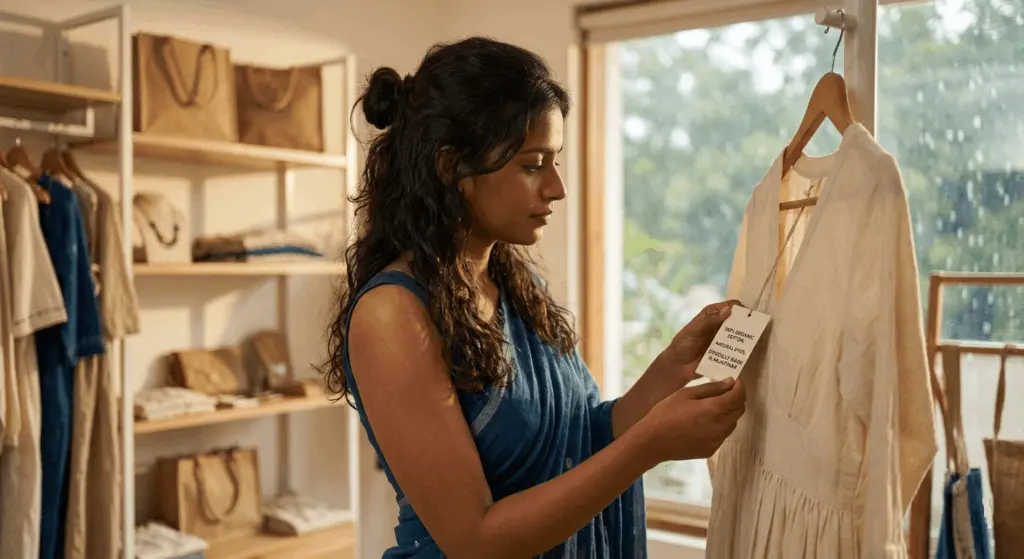
Climate change has become one of the biggest drivers of sustainable consumption. Consumers increasingly understand that every purchasing decision has an environmental impact.
Traditional fast fashion often relies on mass production, excessive water usage, and synthetic materials that generate significant waste. In contrast, sustainable fashion encourages responsible manufacturing, reduced carbon emissions, and longer-lasting products.
Many consumers now prefer purchasing fewer garments that offer better quality and durability instead of frequently replacing inexpensive clothing. This shift reflects the growing “buy less, buy better” mindset that has gained popularity worldwide.
Younger Generations Are Leading the Change
Millennials and Generation Z have emerged as the strongest supporters of sustainable fashion in India.
These consumers actively research brands before making purchases, looking for information about sourcing, manufacturing practices, labour conditions, and environmental commitments. Transparency has become an important factor influencing buying decisions.
Fashion brands that openly communicate their sustainability initiatives often enjoy greater customer trust and long-term loyalty. As digital awareness continues to expand, younger consumers are expected to remain the primary force behind India’s sustainable fashion movement.
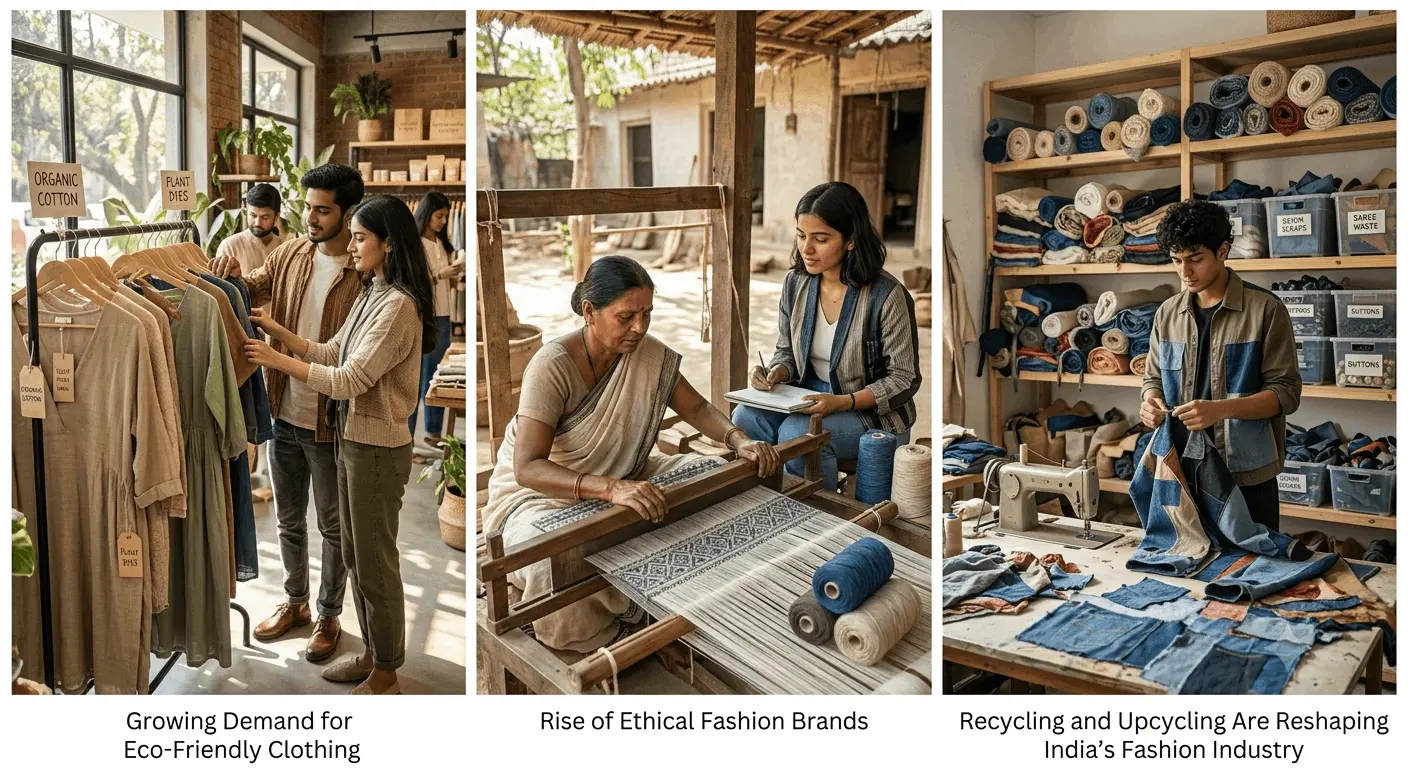
Growing Demand for Eco-Friendly Clothing
One of the most visible trends in 2026 is the increasing demand for environmentally friendly clothing made from sustainable materials. Rather than focusing solely on style, consumers are paying greater attention to how garments are produced and what materials are used.
Fashion companies are responding by expanding collections made from organic cotton, recycled fibres, bamboo fabrics, hemp, linen, and other renewable materials. These alternatives generally require fewer chemicals, consume less water during production, and reduce the overall environmental footprint compared to conventional textiles.
Several Indian brands are also adopting natural dyes extracted from plants and minerals to minimise pollution caused by synthetic chemical dyes. In addition, biodegradable packaging and recyclable garment bags are becoming increasingly common across online and offline retail channels.
Experts note that eco-friendly clothing is no longer limited to premium fashion labels. As production technologies improve and economies of scale increase, sustainable clothing is gradually becoming more accessible to mainstream consumers.
Organic Cotton and Natural Fabrics Gain Popularity
Organic cotton continues to be one of the fastest-growing segments within India’s sustainable textile industry.
Unlike conventional cotton farming, organic cultivation reduces the use of harmful pesticides and synthetic fertilisers while promoting healthier soil and lower water consumption. Consumers appreciate organic cotton not only for its environmental benefits but also for its comfort, durability, and skin-friendly properties.
Similarly, fabrics such as bamboo, hemp, linen, and banana fibre are attracting attention because of their renewable nature and lower environmental impact. Designers are incorporating these materials into both traditional Indian wear and contemporary fashion collections.
The increasing availability of eco-friendly fabrics has encouraged fashion houses to experiment with innovative designs while maintaining sustainability goals.
Consumers Are Choosing Quality Over Quantity
The growing popularity of sustainable fashion has also changed purchasing behaviour.
Instead of buying multiple low-cost garments every season, many consumers now prefer investing in fewer, higher-quality products that last longer. Durable stitching, premium fabrics, timeless designs, and responsible manufacturing have become important purchasing criteria.
This approach not only reduces textile waste but also offers better long-term value for consumers. Industry analysts believe that this shift towards mindful consumption represents one of the most significant changes in India’s retail fashion market.
Rise of Ethical Fashion Brands
Alongside environmentally friendly materials, ethical manufacturing has become another defining feature of India’s fashion industry in 2026.
Many Indian fashion brands are placing greater emphasis on fair wages, safe working environments, transparent supply chains, and responsible sourcing practices. Consumers increasingly want assurance that the garments they purchase are produced under ethical labour conditions rather than through exploitative manufacturing practices.
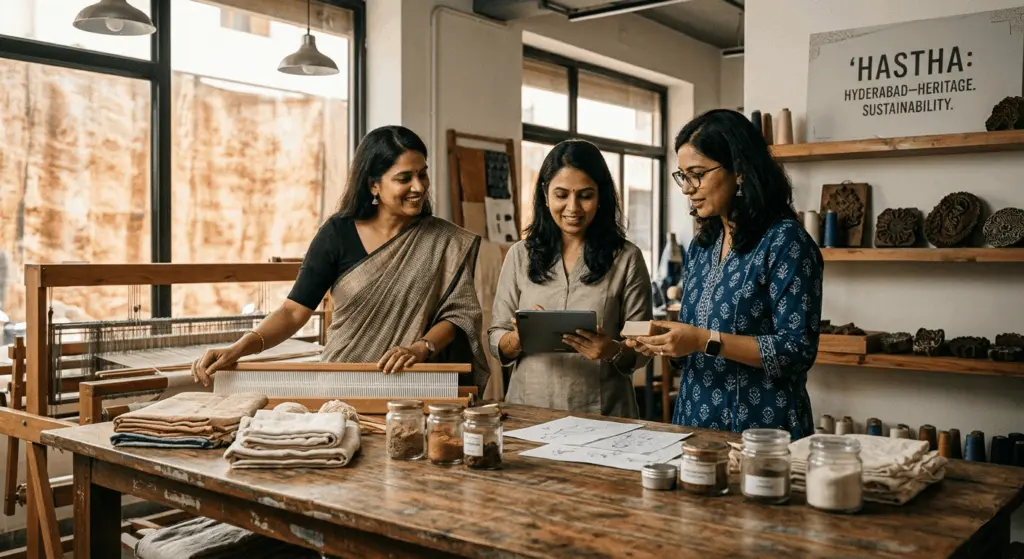
This growing demand for accountability has encouraged businesses to strengthen relationships with local artisans, handloom communities, and rural textile producers. By supporting traditional craftsmanship while ensuring fair compensation, brands are preserving India’s rich textile heritage and creating sustainable livelihood opportunities for thousands of skilled workers.
Several fashion companies have also embraced the concept of “slow fashion,” focusing on producing smaller collections with higher quality standards rather than encouraging excessive consumption. Designers are prioritising craftsmanship, durability, and timeless aesthetics over rapidly changing seasonal trends.
Industry experts believe that ethical fashion is becoming a competitive advantage rather than simply a social responsibility initiative. Brands that successfully combine sustainability, transparency, and quality are expected to build stronger customer loyalty and long-term business growth in the years ahead.
Recycling and Upcycling Are Reshaping India’s Fashion Industry
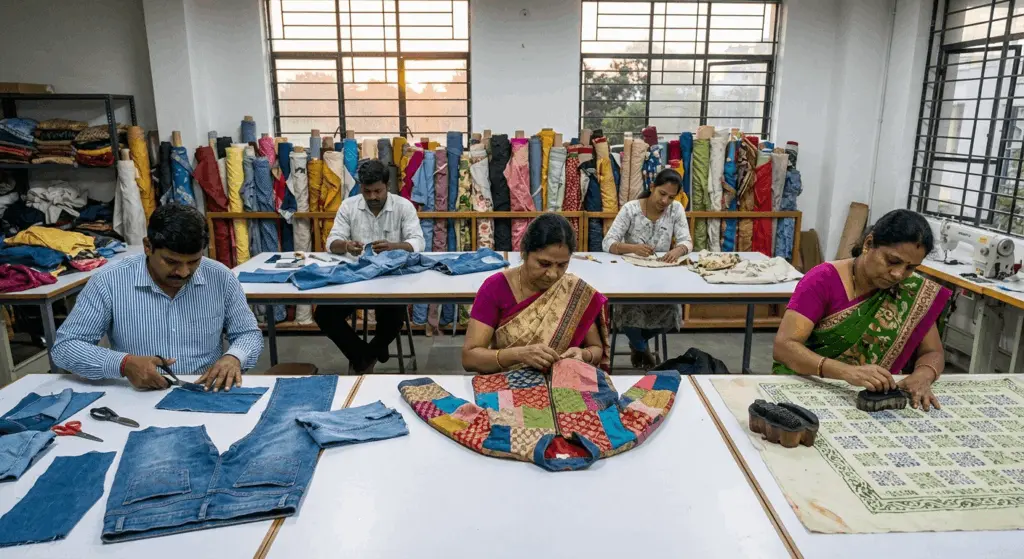
One of the most significant developments in India’s sustainable fashion movement is the growing adoption of recycling and upcycling practices. Rather than allowing discarded textiles to end up in landfills, fashion brands, designers, and consumers are increasingly finding innovative ways to extend the life cycle of clothing.
According to industry observers, textile waste has become a major environmental concern worldwide. Millions of garments are discarded every year, many of which are made from synthetic fibres that take decades to decompose. In response, Indian fashion businesses are embracing circular economy models that focus on reducing waste, reusing materials, and recycling fabrics into new products.
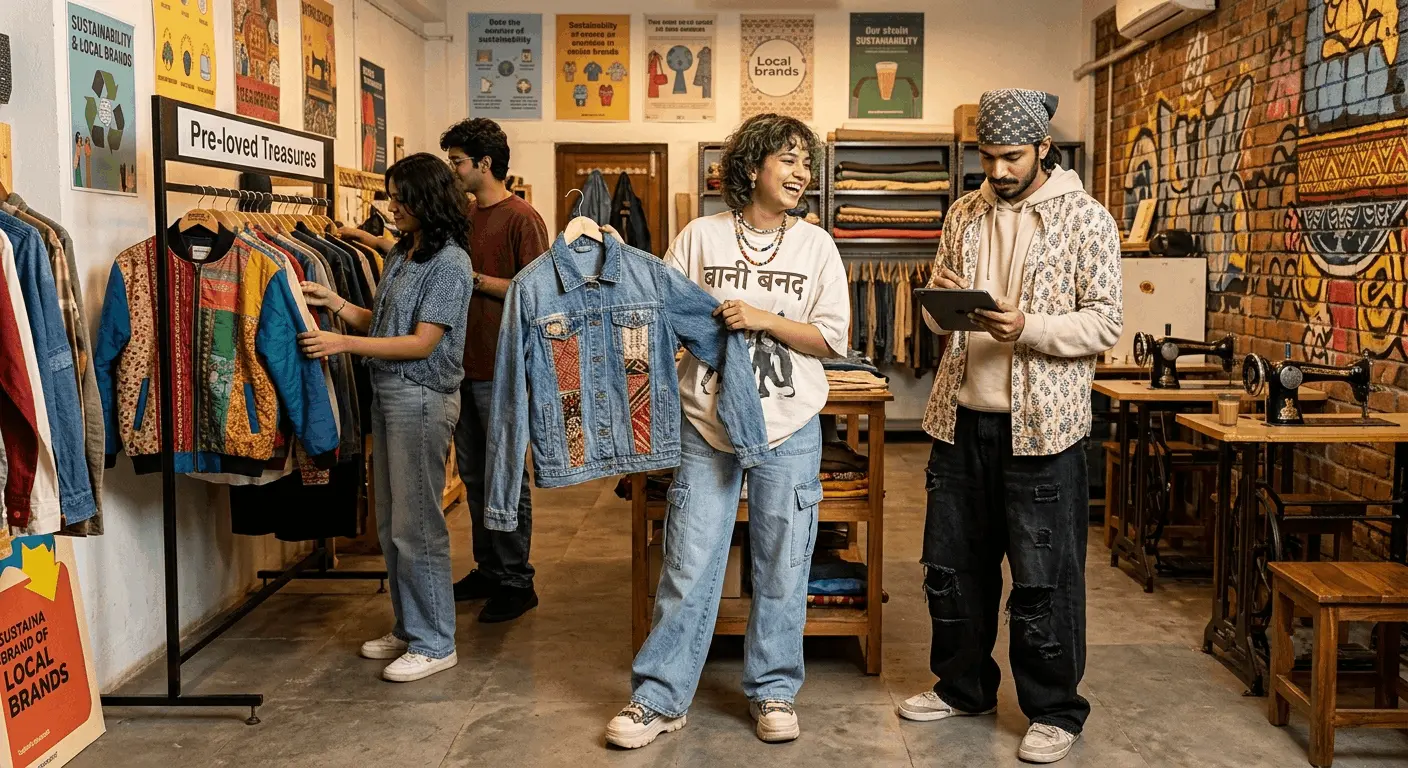
Upcycling has become particularly popular among independent designers and sustainable fashion startups. Instead of producing garments from newly manufactured fabrics, they transform leftover textile scraps, surplus inventory, vintage clothing, and factory waste into fashionable products with unique designs. This approach not only reduces environmental impact but also encourages creativity and craftsmanship.
Consumers are also contributing to this shift by donating clothes, purchasing second-hand apparel, repairing damaged garments, and participating in clothing exchange programmes. Digital resale platforms have expanded significantly, making pre-owned fashion more accessible and socially acceptable than ever before.
Experts believe that the growth of India’s resale and circular fashion market will play a crucial role in reducing textile waste while creating new business opportunities for entrepreneurs and local communities.
Circular Fashion Is Becoming Mainstream
The concept of a circular economy is gradually replacing the traditional “buy, use, and discard” model.
Circular fashion encourages consumers to keep garments in use for as long as possible through repairing, reusing, renting, reselling, and recycling. Instead of viewing clothing as disposable products, they are treated as valuable resources that can be reused multiple times.
Several Indian startups now offer clothing rental services for weddings, festivals, and special occasions. This allows consumers to enjoy premium fashion without contributing to unnecessary production and waste.
Industry analysts believe circular fashion will become one of India’s fastest-growing sustainable business segments over the next decade.
Technology Is Driving Sustainable Fashion Innovation
Technology has emerged as a powerful enabler of sustainability across India’s fashion industry. Artificial Intelligence (AI), blockchain, cloud computing, and advanced manufacturing techniques are helping brands improve efficiency while reducing environmental impact.
Artificial Intelligence is being used to forecast customer demand more accurately, helping manufacturers avoid overproduction—a major contributor to fashion waste. Predictive analytics enables companies to produce inventory based on actual consumer demand rather than estimates.
Blockchain technology is also gaining attention because it increases transparency throughout the supply chain. Consumers can verify where raw materials were sourced, how garments were manufactured, and whether ethical labour standards were followed.
Some brands have started introducing QR codes on product labels, allowing customers to access detailed information about a garment’s manufacturing journey, fabric composition, carbon footprint, and sustainability certifications.
Digital technologies are also improving resource efficiency. Smart manufacturing systems help factories reduce water consumption, minimise fabric wastage, optimise energy use, and lower greenhouse gas emissions during production.
As technology becomes more affordable, experts expect even small and medium-sized fashion businesses to adopt digital sustainability solutions.
AI Is Improving Fashion Production
Artificial Intelligence is transforming the way fashion companies operate.
Instead of producing excess inventory that may never be sold, AI helps businesses analyse customer preferences, predict buying behaviour, and optimise production schedules. This reduces unsold stock, lowers operational costs, and significantly cuts textile waste.
AI-powered quality inspection systems are also improving manufacturing standards by identifying defects earlier in the production process, reducing material losses and improving product consistency.
Government Policies Supporting Sustainable Fashion
The Government of India continues to promote environmentally responsible manufacturing through various initiatives that support sustainable textiles, innovation, and green entrepreneurship.
Programmes such as Startup India, Make in India, Skill India, and Production Linked Incentive (PLI) schemes have encouraged investment in modern textile manufacturing, innovation, and technology adoption.
Government agencies are also working with textile manufacturers to improve water conservation, promote cleaner production processes, and encourage responsible waste management.
Several state governments have introduced policies supporting handloom clusters, artisan communities, and traditional weaving industries. These initiatives help preserve India’s cultural heritage while generating employment opportunities in rural areas.
Industry experts believe stronger collaboration between government bodies, private companies, educational institutions, and research organisations will further strengthen India’s position as a global leader in sustainable textiles.
Supporting Local Artisans and Traditional Crafts
Sustainability is not only about protecting the environment—it is also about supporting communities.
Many sustainable fashion brands collaborate directly with handloom weavers, tribal artisans, embroidery specialists, and rural craftsmen. By eliminating unnecessary intermediaries, these partnerships ensure that artisans receive fair compensation for their work.
This model helps preserve centuries-old textile traditions while providing consumers with authentic handcrafted products that reflect India’s rich cultural heritage.
Supporting local craftsmanship also contributes to rural economic development and promotes inclusive growth across the fashion value chain.
Public Impact of Sustainable Fashion
The increasing popularity of sustainable fashion is creating positive economic, environmental, and social outcomes across India.
Consumers are becoming more aware of responsible shopping practices, businesses are investing in cleaner production methods, and startups are introducing innovative solutions that promote long-term sustainability.
The movement has also generated new employment opportunities in sustainable textile manufacturing, ethical sourcing, recycling, digital resale platforms, eco-friendly packaging, and green technology.
Educational institutions have started incorporating sustainability into fashion design and textile management programmes, preparing future professionals for a rapidly evolving industry.
Experts believe that continued consumer awareness, responsible corporate practices, and supportive government policies will accelerate India’s transition towards a more sustainable fashion ecosystem.
Challenges Facing Sustainable Fashion in India
Despite encouraging growth, several challenges continue to slow the widespread adoption of sustainable fashion.
One of the biggest barriers is affordability. Sustainable garments often cost more than mass-produced fast fashion because of higher-quality materials, ethical labour standards, and environmentally responsible production methods.
Limited consumer awareness remains another challenge, particularly in smaller cities where price often remains the primary purchasing factor.
Greenwashing has also become a growing concern. Some companies market products as “eco-friendly” without providing credible evidence or certifications, making it difficult for consumers to distinguish genuinely sustainable brands from misleading marketing claims.
In addition, supply chain limitations, infrastructure gaps, and the availability of certified sustainable raw materials continue to affect industry growth.
However, experts believe these challenges will gradually decrease as technology improves, production scales increase, and consumer awareness continues to rise.
Future of Sustainable Fashion in India
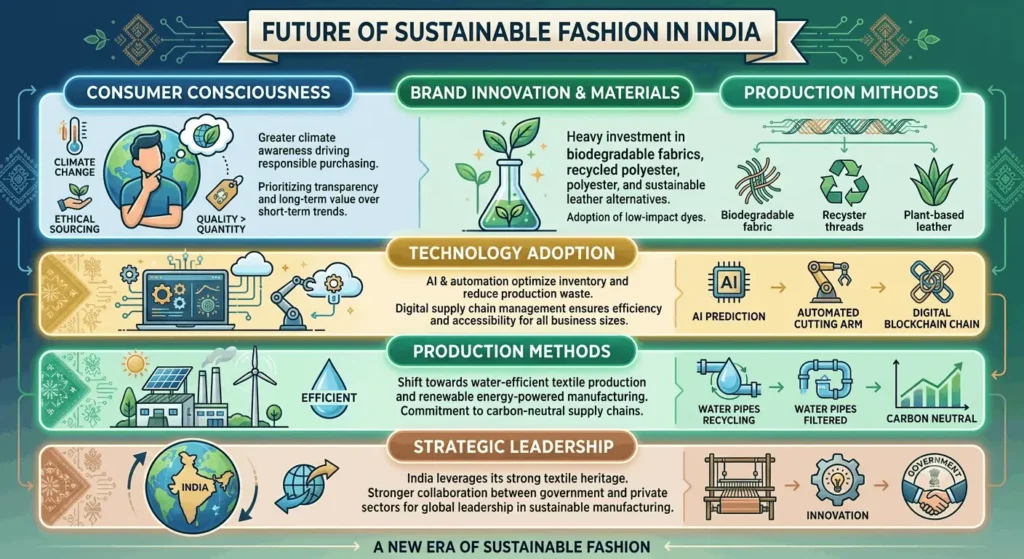
The outlook for sustainable fashion in India remains highly promising as consumers, businesses, and policymakers increasingly recognise the importance of environmentally responsible growth. Industry experts predict that sustainability will become a core business strategy rather than a niche marketing initiative over the coming years.
Fashion brands are expected to invest more heavily in innovative materials such as biodegradable fabrics, recycled polyester, plant-based leather alternatives, and low-impact dyes. Research into water-efficient textile production, renewable energy-powered manufacturing, and carbon-neutral supply chains is also gaining momentum.
Artificial Intelligence, automation, and digital supply chain management are likely to play an even greater role in helping companies optimise inventory, reduce waste, and improve production efficiency. As technology becomes more affordable, sustainable manufacturing practices are expected to become accessible to businesses of all sizes.
Consumers will also continue to influence the industry’s direction. Greater awareness about climate change, ethical sourcing, and responsible consumption is encouraging shoppers to prioritise quality, transparency, and long-term value over short-term trends.
Experts believe India’s strong textile heritage, combined with growing innovation and government support, positions the country to become a global leader in sustainable fashion manufacturing over the next decade.
How Consumers Can Support Sustainable Fashion
Building a sustainable fashion ecosystem requires participation from both businesses and consumers. Every purchasing decision contributes to shaping the future of the industry.
Consumers can adopt several practical habits to reduce their environmental footprint:
- Choose quality garments that last longer instead of frequently buying low-cost fast fashion.
- Support brands that provide transparent information about sourcing and manufacturing practices.
- Look for clothing made from organic cotton, hemp, bamboo, linen, or recycled fibres.
- Repair damaged clothing whenever possible instead of replacing it immediately.
- Donate, exchange, or resell garments that are no longer needed.
- Wash clothes responsibly using lower temperatures and avoid excessive machine drying to extend garment life.
- Purchase only what is genuinely required to reduce unnecessary textile waste.
Small lifestyle changes adopted by millions of consumers can collectively create a significant positive impact on the environment.
Frequently Asked Questions (FAQs)
What is sustainable fashion?
Sustainable fashion refers to designing, manufacturing, and consuming clothing in ways that minimise environmental impact while promoting ethical labour practices, responsible sourcing, and long-term resource conservation.
Why is sustainable fashion becoming popular in India?
Growing awareness about climate change, pollution, ethical manufacturing, and responsible consumer behaviour has encouraged more Indians to choose environmentally friendly clothing and support sustainable brands.
What materials are commonly used in sustainable fashion?
Popular sustainable materials include organic cotton, hemp, bamboo fibre, recycled polyester, linen, TENCEL™, recycled fabrics, and natural dyes that reduce environmental impact compared to conventional textiles.
Is sustainable clothing more expensive?
Some sustainable garments may have higher upfront prices because they use better-quality materials and ethical production methods. However, they often last longer, making them a better long-term investment for consumers.
How are Indian fashion brands adopting sustainability?
Many Indian brands are reducing waste, using eco-friendly fabrics, supporting local artisans, improving supply chain transparency, adopting recyclable packaging, and implementing responsible manufacturing practices.
What is the future of sustainable fashion in India?
Industry experts expect continued growth driven by technological innovation, government support, environmentally conscious consumers, and increasing investment in sustainable manufacturing and circular fashion models.
Conclusion
India’s sustainable fashion movement represents a significant shift in the country’s retail and textile landscape. What was once considered an alternative market has evolved into an important part of the mainstream fashion industry. Businesses are increasingly embracing ethical production, environmentally friendly materials, recycling initiatives, and transparent supply chains to meet changing consumer expectations.
While challenges such as affordability, awareness, and supply chain limitations remain, the industry’s long-term outlook continues to be positive. Advances in technology, supportive government policies, and growing public awareness are expected to accelerate the adoption of sustainable practices across the fashion ecosystem.
For consumers, sustainable fashion is no longer just about choosing environmentally friendly clothing—it is about making informed decisions that support responsible businesses, reduce waste, and preserve natural resources for future generations.
As India strengthens its position as one of the world’s leading textile producers, sustainable fashion is expected to play an increasingly important role in shaping the future of the country’s economy, innovation, and environmental responsibility. The choices made by businesses and consumers today will help define a greener, more resilient, and more ethical fashion industry for years to come.


Leave a Reply