

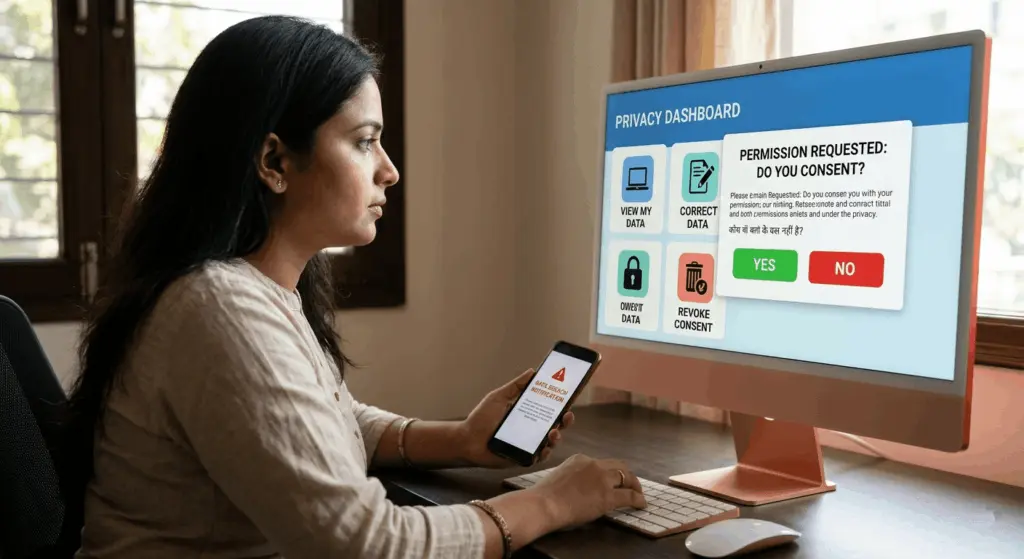
India’s digital economy is expanding rapidly, with millions of people relying on online banking, e-commerce, social media, healthcare apps, and digital payment platforms every day. As digital services become part of everyday life, concerns about how personal information is collected, stored, and shared have also increased.
To address these concerns, India has introduced updated data privacy regulations aimed at strengthening the protection of personal information and increasing accountability for organisations handling digital data. The evolving framework seeks to give individuals greater control over their personal information while encouraging businesses to adopt responsible data management practices.
Why Data Privacy Has Become a National Priority
Data has become one of the most valuable assets in the digital economy. Every online transaction, mobile application, and digital service collects information ranging from names and contact details to financial and behavioural data.
Cybersecurity experts point out that stronger privacy standards are necessary because:
Rising Digital Adoption
India has witnessed rapid growth in internet users and digital transactions.
Increased Cyber Risks
Data breaches, identity theft, and online fraud have become major concerns.
Consumer Awareness
Users increasingly want transparency regarding how their information is handled.
What the New Data Privacy Rules Mean
The updated regulations place greater emphasis on transparency and informed consent.
Clear User Consent
Companies are expected to explain:
- What information is collected.
- Why it is collected.
- How it will be used.
- How long it will be stored.
Users should be able to make informed decisions before sharing personal information.
Right to Access Information
Individuals may request details regarding the personal data organisations hold about them.
Correction of Information
Users can seek corrections if their information is inaccurate or outdated.
Data Deletion Requests
Under certain circumstances, users may request deletion of their personal information, subject to applicable legal requirements.

Important Changes for Indian Users
The revised framework introduces practical rights for digital consumers.
Easier Privacy Policies
Companies are encouraged to present privacy information in simpler language.
Consent Management
Users may have greater flexibility to review and withdraw consent for specific data processing activities.
Data Breach Notifications
Businesses may be required to notify affected users and authorities in the event of significant data breaches.
How Businesses Will Be Affected
The new regulations extend beyond users and significantly impact companies handling personal data.
Better Data Security
Businesses may need to invest in:
- Cybersecurity systems.
- Encryption technologies.
- Secure cloud infrastructure.
- Employee awareness training.
Compliance Requirements
Companies may review:
- Privacy policies.
- Internal data handling processes.
- Customer consent mechanisms.
- Vendor management systems.
Long-Term Benefits
Experts believe stronger privacy practices can improve customer trust and brand reputation.
Government Oversight and Enforcement
Regulatory authorities are expected to oversee compliance and investigate violations where necessary.
Monitoring
Authorities may review organisational practices.
Penalties
Non-compliance could lead to financial and regulatory consequences.
Public Awareness
Educational initiatives can help citizens better understand digital privacy rights.
What These Rules Mean for Everyday Users
The changes could improve confidence in digital services.
Greater Transparency
People can better understand how their information is used.
More Control
Users can make informed choices about data sharing.
Better Protection
Enhanced security standards may reduce risks associated with cyber incidents.
Challenges Ahead
Implementation will require cooperation between regulators, businesses, and consumers.
- Limited public awareness.
- Compliance costs for SMEs.
- Rapid technological changes.
- Balancing innovation with privacy.
What Happens Next?
Industry experts expect ongoing refinements as technology evolves.
Future developments could include:
- Improved cybersecurity frameworks.
- Better consent management systems.
- AI-assisted compliance tools.
- Enhanced public awareness campaigns.
Tips for Users to Protect Their Data
Even with stronger regulations, experts recommend basic digital safety practices.
- Read privacy settings.
- Use strong passwords.
- Enable two-factor authentication.
- Avoid sharing unnecessary personal information.
- Keep apps updated.
- Verify website authenticity.
Conclusion
India’s evolving data privacy framework represents an important step toward strengthening digital trust in one of the world’s fastest-growing online economies. By promoting transparency, user rights, and responsible data practices, the regulations aim to create a safer digital environment for both individuals and businesses.
For consumers, understanding privacy rights can lead to better control over personal information. For businesses, adopting strong data protection measures can build long-term customer confidence and support sustainable digital growth.
As India’s digital ecosystem continues to expand, awareness and responsible data management will play an increasingly important role in shaping the future of online services.

Leave a Reply