

Hyderabad Metro Ridership 2026: 5 Lakh Daily Passengers, Busiest Stations & Future Expansion
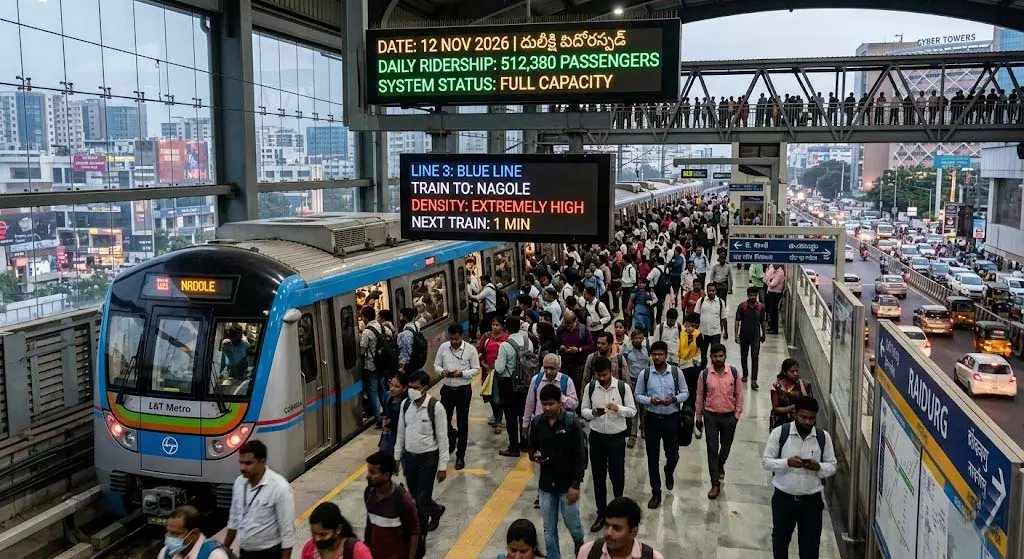
Hyderabad: The Hyderabad Metro Rail has emerged as the city’s primary transport backbone in 2026, recording an average daily ridership of over 5 lakh passengers. With increasing urban expansion and IT corridor growth, the metro network is now operating close to full capacity during peak hours.
Daily Ridership Crosses 5 Lakh Mark
The Hyderabad Metro has transitioned from a convenience-based system to a critical urban mobility solution.
Key Ridership Statistics
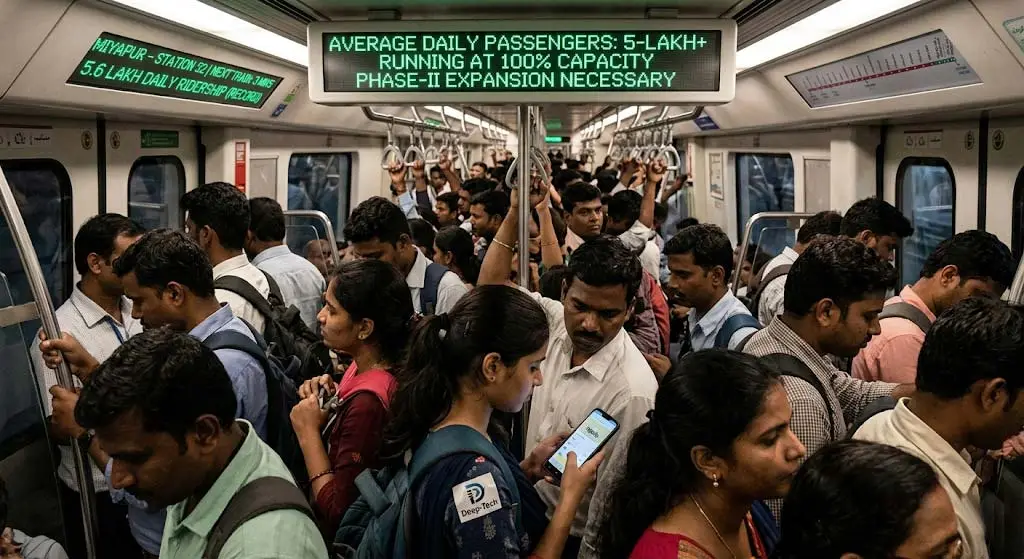
- Average Daily Passengers: 4.8 lakh – 5.2 lakh
- Peak Record: 5.63 lakh passengers
- Monthly Ridership: Over 1.5 crore users
- Growth Trend: Up from ~4.4 lakh in 2024
This growth reflects Hyderabad’s rapid expansion, especially in IT and residential corridors.
Metro Operating at Full Capacity
Peak Hour Pressure
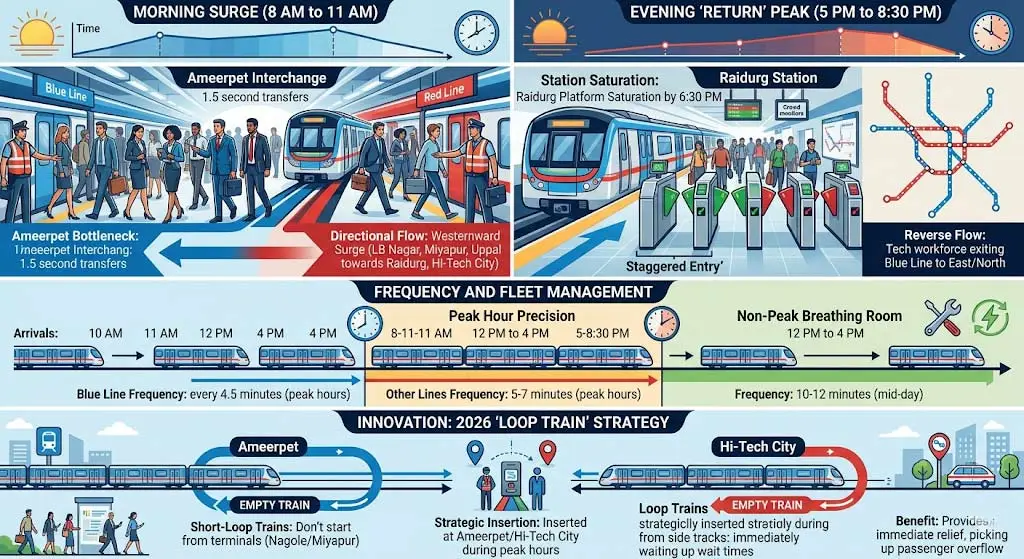
- Morning Peak: 8 AM – 11 AM
- Evening Peak: 5 PM – 8:30 PM
- Train Frequency: Every 3–5 minutes
The current 69.2 km network with 57 stations is reaching its operational limits, creating what experts call a “capacity wall.”
Why Capacity Is a Concern
- 100% fleet utilization during peak hours
- Platform overcrowding at interchange stations
- Limited scope to increase frequency without new trains
Busiest Metro Stations in Hyderabad (2026 Ranking)
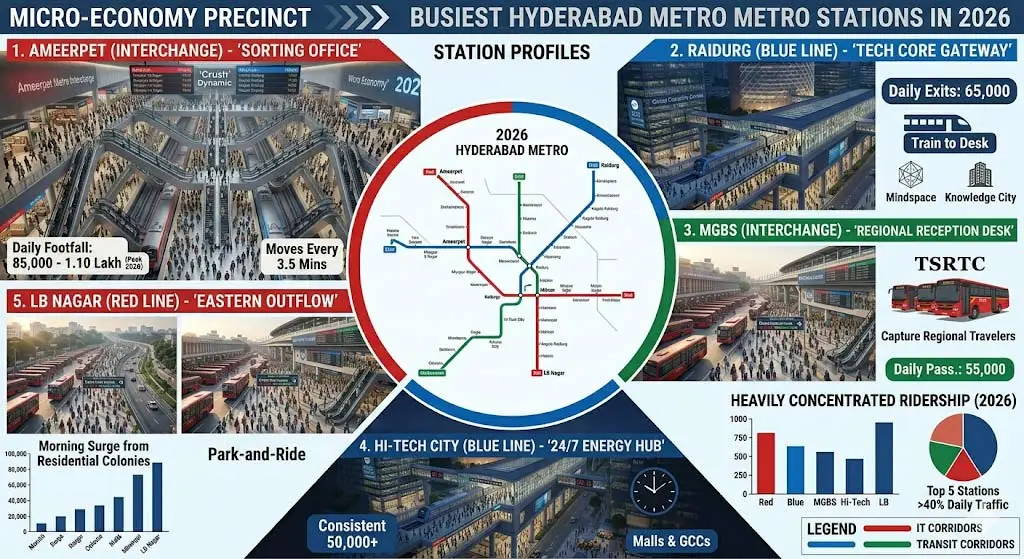
1. Ameerpet (Interchange Hub)
- Daily Footfall: 85,000 – 1,10,000
- Connects Red & Blue Lines
- Major transfer hub for IT commuters
2. Raidurg (IT Gateway)
- Daily Footfall: ~65,000
- Serves HITEC City & Financial District
- Direct access to corporate hubs
3. MGBS (Transport Hub)
- Daily Footfall: ~55,000
- Connects Metro with interstate bus services
4. Hi-Tech City Station
- Daily Footfall: 50,000+
- Active till late night due to IT workforce
5. LB Nagar
- Daily Footfall: ~48,000
- Major residential origin point
Peak Travel Patterns and Crowd Flow
Morning Rush Trend
- Heavy movement from residential zones → IT corridor
- Ameerpet sees transfers every few seconds
Evening Reverse Flow
- Outbound traffic spreads across multiple lines
- Station congestion peaks at 6:30 PM
2026 Innovation – Loop Train Strategy
- Short-loop trains inserted at busy stations
- Reduces platform congestion instantly
- Improves passenger distribution
Government Takeover of Hyderabad Metro (2026)
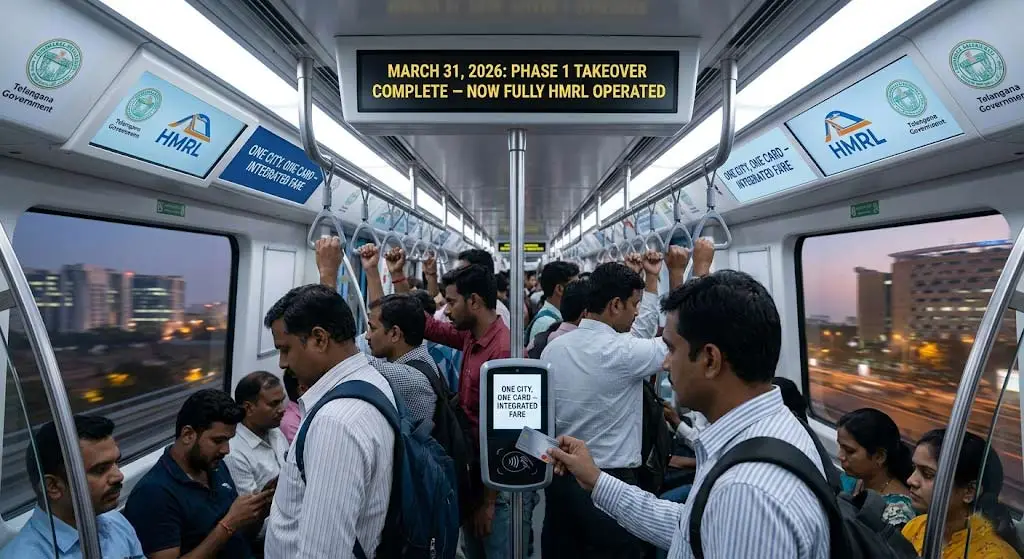
A major shift is underway as the Telangana Government moves to take full control of the metro system.
Financial Overview
- Total Deal Value: ₹15,000 crore
- ₹2,000 crore equity buyout
- ₹13,000 crore debt absorption
Why This Move Matters
- Ends PPP model limitations
- Enables faster Phase 2 expansion
- Improves operational control
What Changes for Passengers?
Unified Fare System
The government plans to introduce a standardized pricing model, making long-distance travel more affordable.
Integrated Transport Vision
- Metro + Bus + Airport connectivity
- “One City, One Card” system expected
Service Improvements Expected
- Increased train frequency
- Better crowd management
- Expansion of rolling stock
Phase 2 Expansion – The Next Big Step
The upcoming 76+ km Phase 2 network is critical to handle future demand.
Key Objectives
- Reduce congestion on existing lines
- Expand connectivity to new residential zones
- Support Hyderabad’s IT and infrastructure growth
Public Impact
The metro system has significantly impacted daily life in Hyderabad:
- Reduced travel time across the city
- Lower dependence on road transport
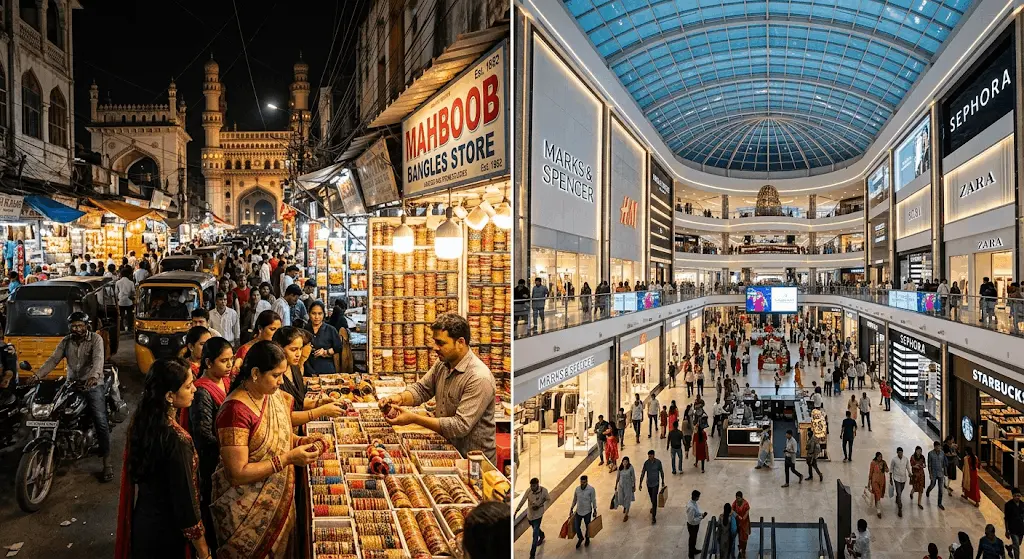
- Boost to commercial activity near stations
- Creation of “micro-economies” around metro hubs
What Happens Next?
Authorities are expected to:
- Accelerate Phase 2 approvals
- Increase train capacity
- Improve station infrastructure
- Introduce integrated ticketing systems
Conclusion
The Hyderabad Metro in 2026 has evolved into a high-density urban lifeline, handling over 5 lakh passengers daily. While capacity constraints remain a challenge, the government takeover and upcoming expansion plans signal a strong push toward a more efficient and integrated transport system.




Leave a Reply