

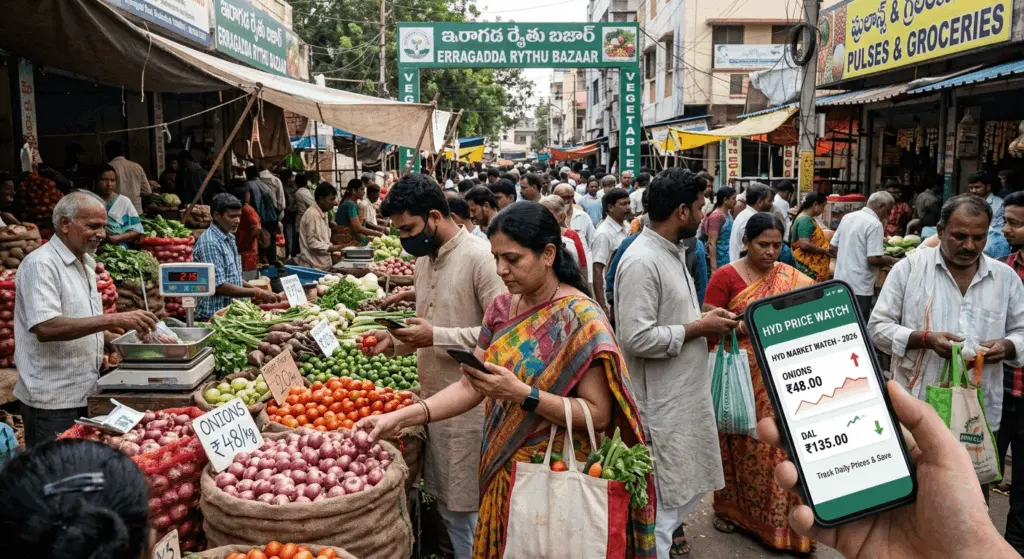
Introduction: Why Hyderabad Families Are Watching Grocery Prices Closely in 2026
In 2026, Hyderabad residents are watching grocery prices almost as closely as they watch daily news. For many households, the monthly budget now depends heavily on changing vegetable and grocery rates. Whether shopping from traditional Rythu Bazaars, local kirana stores, or online delivery apps, food inflation has become a major topic in everyday life.
From onion and tomato prices to dal and edible oil trends, understanding the Hyderabad market has become essential for smart household planning.
This Hyderabad Market Watch report breaks down the latest vegetable and grocery price changes, what is driving them, and how families can save more.
Related Posts
- Hyderabad Rain Alert Today: Thunderstorms Disrupt Daily Life Across City
- PG vs Flat in Hyderabad 2026 | Cost Comparison for Students
- Hyderabad Startup Boom 2026: Top Emerging Companies Driving India’s Tech Future
Hyderabad Vegetable Price Trends in 2026
Rythu Bazaar Still Dominates Local Shopping
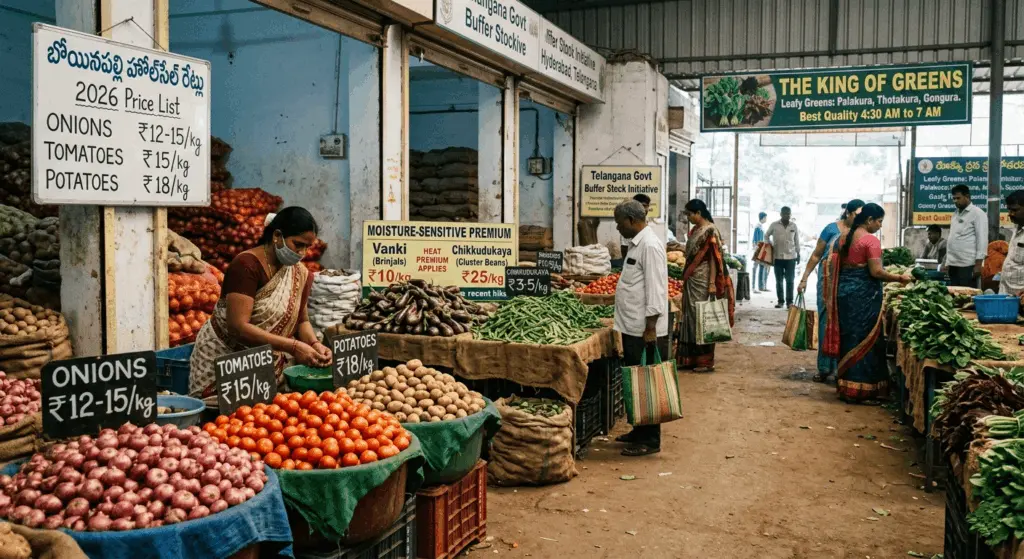
Despite rapid digital adoption, Hyderabad’s traditional Rythu Bazaar remains the first choice for budget-conscious shoppers.
Popular markets like:
- Erragadda Rythu Bazaar
- Bowenpally Wholesale Market
- Gudimalkapur Market
- Kukatpally Rythu Bazaar
continue to offer competitive prices compared to supermarkets and apps.
Onion, Tomato, and Potato Prices Stabilize
Good news for Hyderabad households—basic vegetables are finally stable.
Current rates (average):
| Vegetable | Price Range |
|---|---|
| Onion | ₹12–₹15/kg |
| Tomato | ₹15–₹20/kg |
| Potato | ₹18–₹22/kg |
This price stability is largely due to:
- government buffer stock policies
- improved cold storage
- better local supply chains
This has reduced the price shocks seen in previous years.
Heat Is Making Some Vegetables Expensive
Not all vegetables are affordable.
Due to rising summer temperatures in Telangana:
- Brinjal (Vankaya) ↑ 15%
- Cluster Beans (Chikkudukaya) ↑ 12%
- Capsicum ↑ 10%
Why?
Because moisture-sensitive vegetables spoil faster during transport, increasing operational costs.
This “heat premium” is becoming a new market trend.
Leafy Greens Sell Out Early
If you want fresh:
- Palakura (Spinach)
- Gongura
- Thotakura
visit your nearest Rythu Bazaar before 7 AM.
Fresh farm bundles arrive between 4:30 AM–6 AM, and by mid-morning the best stock is gone.
Grocery Price Trends in Hyderabad
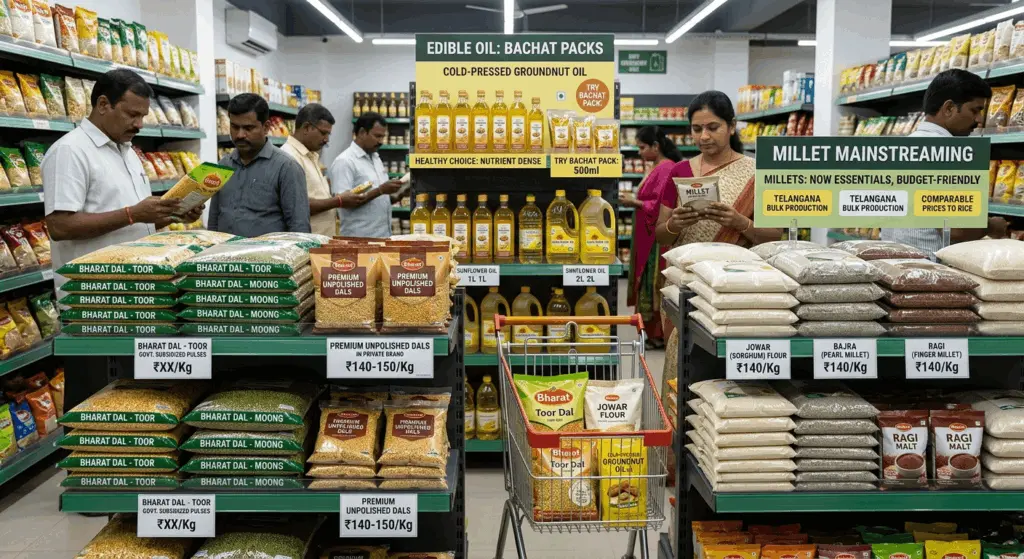
Dal Prices Finally Stabilizing
After volatility in 2025, pulses are calmer.
Current average prices:
| Item | Price |
|---|---|
| Toor Dal | ₹145/kg |
| Moong Dal | ₹140/kg |
| Chana Dal | ₹95/kg |
Government-backed Bharat Dal distribution helped reduce price spikes.
This is a major relief for middle-class households.
Millets Are Becoming Mainstream
A major dietary shift is happening.
People are replacing white rice with:
- Jowar
- Bajra
- Ragi
Why?
Because:
- healthier
- locally available
- now more affordable
Millets are no longer “premium health food”—they’re entering regular kitchens.
Edible Oil Prices Rising Again
Sunflower oil is seeing another seasonal increase.
Average prices:
- Sunflower oil: ₹160/litre
- Groundnut oil: ₹220/litre
- Mustard oil: ₹180/litre
Consumers are responding by buying:
- smaller “Bachat packs”
- cold-pressed oils
- bulk family packs during offers
Smart Shopping Trends in Hyderabad
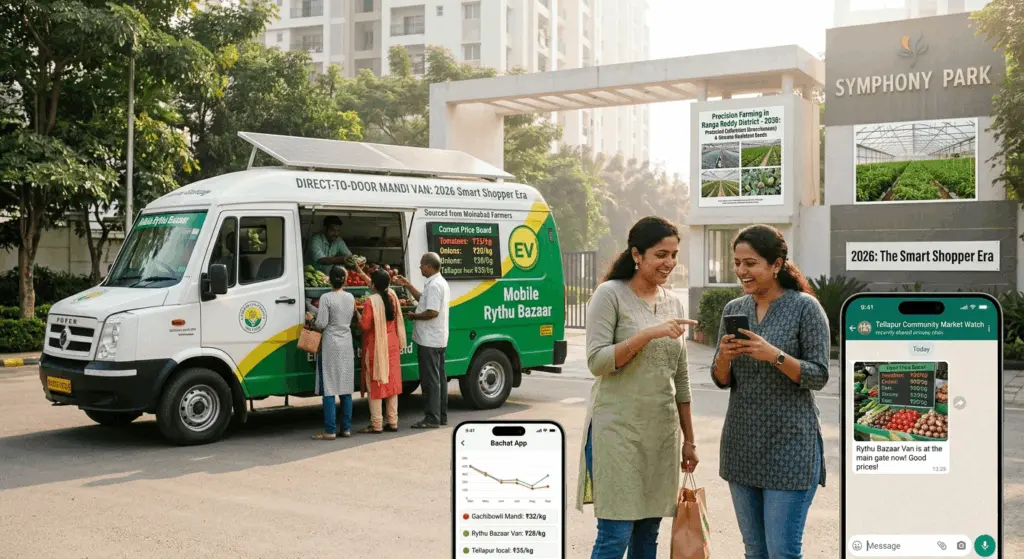
WhatsApp Communities Are Driving Savings
One surprising trend in 2026:
Apartment communities now run market alert WhatsApp groups.
Residents share:
- live vegetable prices
- discount alerts
- mobile mandi timings
This is helping families save daily.
Grocery Apps Are Changing Buying Behavior
Popular grocery apps now allow:
- live price comparisons
- price history tracking
- coupon stacking
- flash offers
This makes shoppers more price-aware than ever.
Smart consumers now compare before buying.
Farmers Are Becoming More Tech-Driven
Outside Hyderabad, especially in Ranga Reddy district, farmers are using:
- drip irrigation
- AI weather forecasting
- climate-resistant seeds
- greenhouse farming
This reduces crop failure risk and keeps supply more stable.
Five years ago, one bad rainstorm could double prices.
Now the supply chain is far stronger.
Rise of Mobile “Electric Mandis”
A major innovation in Hyderabad:
Electric Mandi Vans
These mobile vegetable vans:
- source directly from farmers
- visit gated communities
- reduce middlemen costs
- deliver fresher produce
This “farm-to-door” model is growing rapidly.
What Experts Are Saying
Market analysts believe Hyderabad’s grocery ecosystem is becoming more resilient because of:
- better storage infrastructure
- improved farm technology
- digital price transparency
- stronger urban demand
However, climate remains the biggest future risk.
Extreme heat can still disrupt pricing quickly.
Smart Tips for Hyderabad Families
To save more in 2026:
- Buy vegetables early morning
- Use Rythu Bazaar weekly
- Compare app prices before checkout
- Buy staples in bulk monthly
- Join local WhatsApp market groups
- Track seasonal produce
Small habits can save ₹2,000–₹5,000/month.
Conclusion: Hyderabad’s Kitchen Economy Is Changing
The Hyderabad kitchen in 2026 is powered by both traditional wisdom and modern technology.
Rythu Bazaars continue to anchor affordability.
Apps are improving price transparency.
Farm innovation is strengthening supply.
And informed consumers are staying ahead of inflation.
The future of food shopping in Hyderabad is not just cheaper—it’s smarter.






Leave a Reply