

Table of contents
- Hyderabad Traffic Report 2026: Worst Congested Areas & Delay Zones
Hyderabad Traffic Report 2026: Worst Congested Areas & Delay Zones
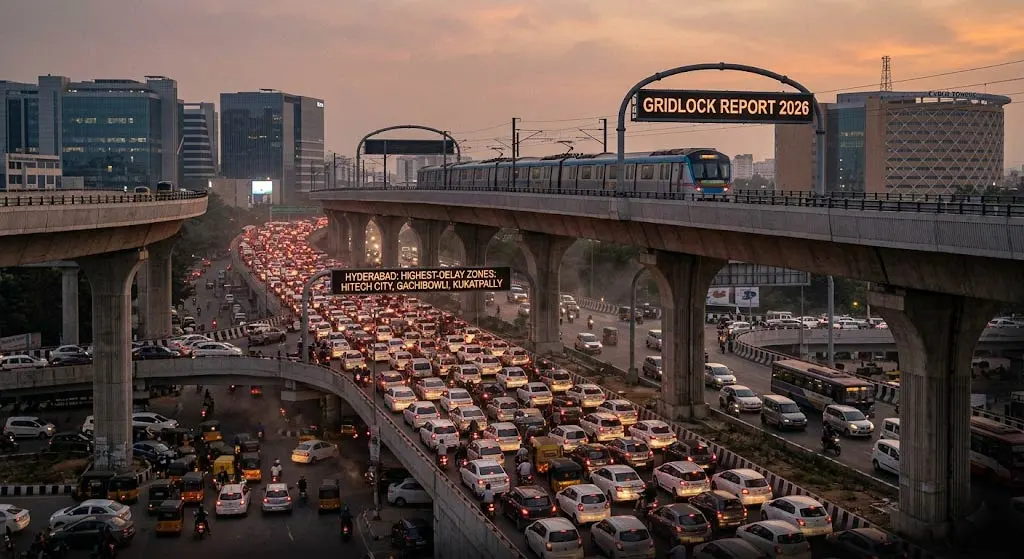
Hyderabad Faces Rising Traffic Pressure in 2026
Hyderabad continues to expand rapidly in 2026, but with growth comes congestion. Despite major infrastructure projects like flyovers and metro expansion, daily commuters are experiencing longer travel times, especially during peak hours.
With IT hubs in the west and industrial growth in the east, traffic pressure is now concentrated in key zones across the city.
Related Posts
- Hyderabad Nightlife Guide 2026: Safe Areas, Timings & Travel Tips
- Women’s Safety in Hyderabad 2026: Safest & Risk Areas Ranked by Public Opinion
Hi-Tech City & Raidurg – Hyderabad’s Biggest Traffic Bottleneck
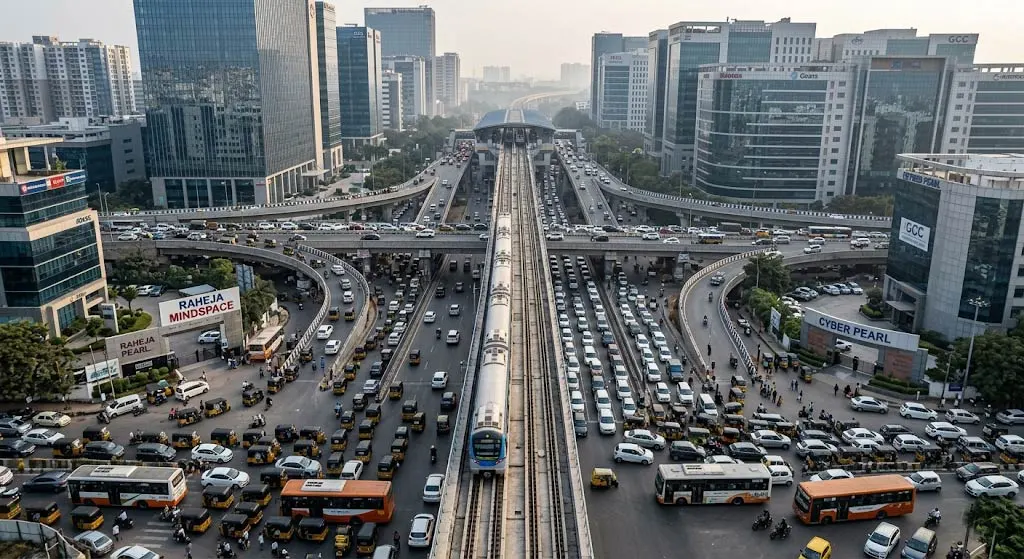
Cyber Towers to Biodiversity Junction
This stretch has become the most congested IT corridor in the city.
Key Issues
- Entry congestion at IT parks
- Heavy mix of cabs, buses, and bikes
- Overloaded flyover exits
2026 Traffic Data
- Average speed: 5–7 km/h
- Delay time: 25–35 minutes
The biggest issue is last-mile congestion, where a short 3 km stretch takes longer than a 15 km metro journey.
Chandrayangutta & Falaknuma – The Southern Traffic Crisis
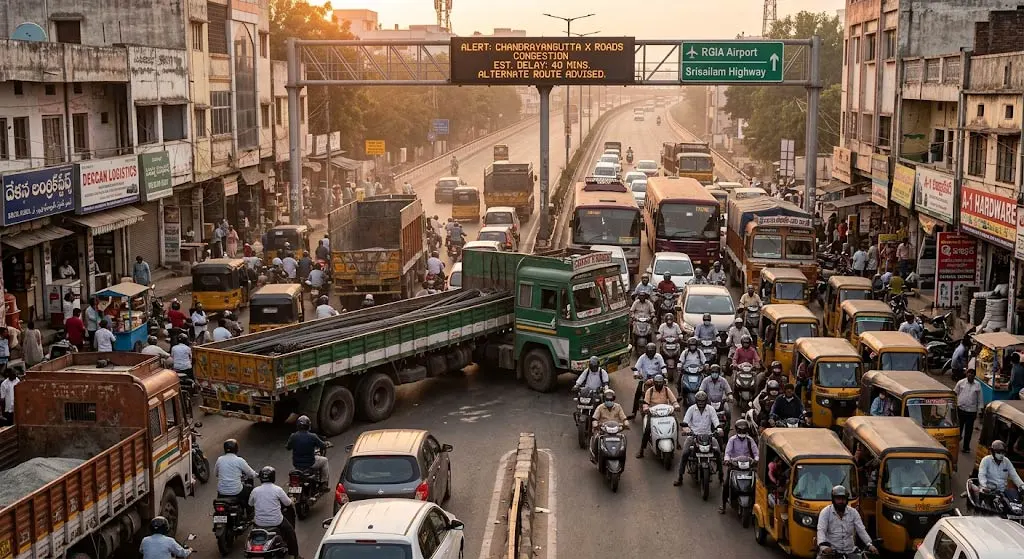
Heavy Vehicle Dominated Zone
Unlike IT areas, this region handles industrial and logistics traffic.
Key Problems
- Narrow roads meeting highways
- Heavy trucks + local traffic mix
- Lack of metro connectivity
2026 Delay Data
- Average delay: Up to 40 minutes
- Peak hours: 8–11 AM & 6–9:30 PM
This is currently Hyderabad’s most unpredictable traffic zone.
JNTU & KPHB – High-Density Residential Congestion
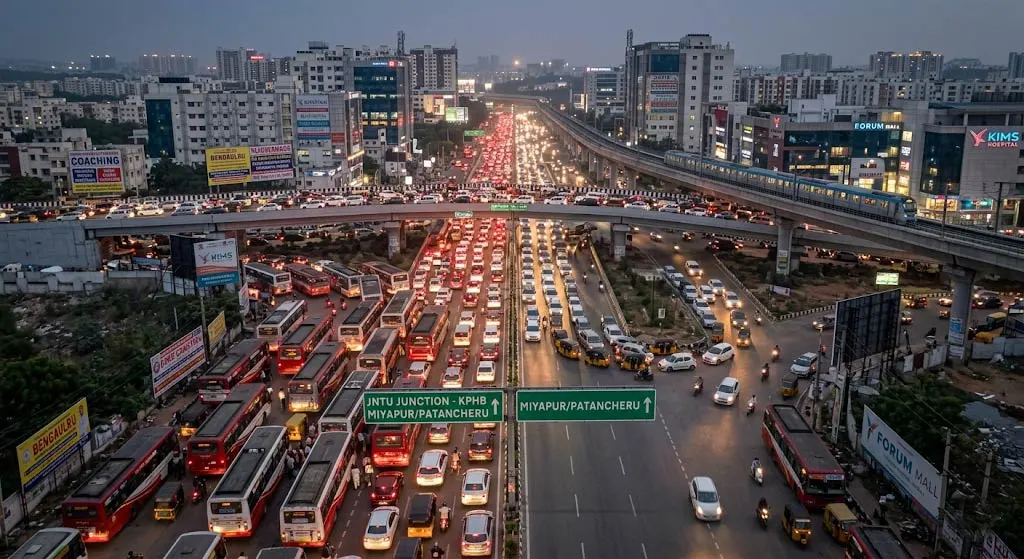
JNTU Junction to Miyapur Stretch
This area faces heavy residential + commercial traffic pressure.
Key Issues
- Frequent U-turn congestion
- Coaching centers + malls traffic
- Private buses blocking lanes
2026 Traffic Impact
- Evening delay: 20 minutes
- Peak window: 6 PM – 9 PM
Even with flyovers, ground-level traffic remains slow and chaotic.
LB Nagar – Hyderabad’s Eastern Gateway Traffic Jam
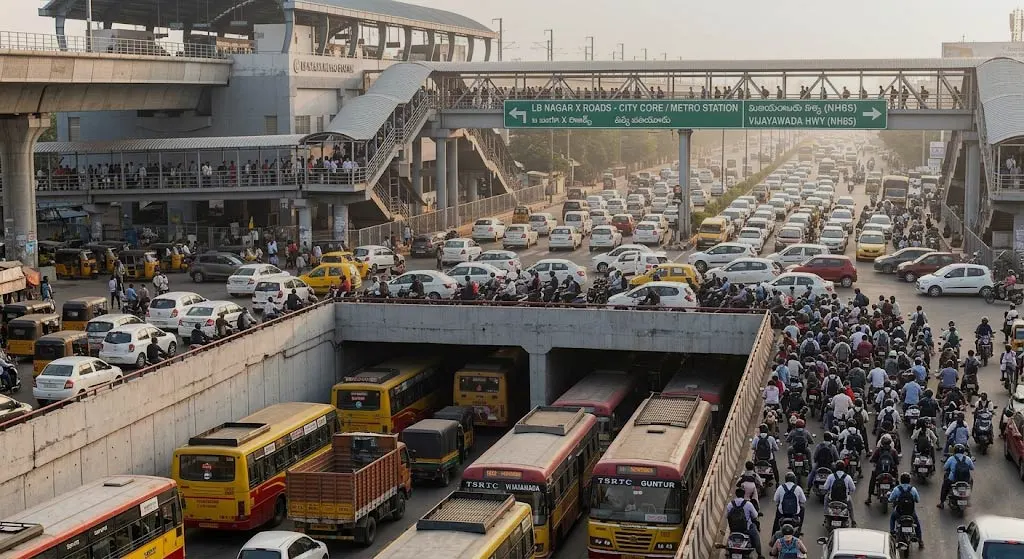
NH65 Entry Pressure
LB Nagar acts as the main entry point for highway traffic into the city.
Traffic Layers
- Inter-city buses
- Local commuters
- Commercial vehicles
Key Data (2026)
- Peak congestion: Monday mornings & weekends
- Major stretch: Chintalkunta to LB Nagar
👉 This zone is hitting a capacity limit despite infrastructure upgrades.
Why Traffic Is Increasing in Hyderabad
Key Reasons
- Rapid urban expansion
- Increase in private vehicles
- Last-mile connectivity issues
- High dependency on roads
What Commuters Should Do
Smart Travel Tips
- Use metro for long routes
- Avoid peak hours (8–11 AM, 6–9 PM)
- Plan alternate routes
- Use ride-sharing during peak congestion
Conclusion
Hyderabad’s traffic situation in 2026 highlights a growing gap between infrastructure development and population growth. While projects like metro and flyovers have improved mobility, key areas like Hi-Tech City, LB Nagar, and Chandrayangutta continue to face severe congestion.
Understanding these traffic hotspots can help commuters plan better and avoid daily delays.


Leave a Reply